
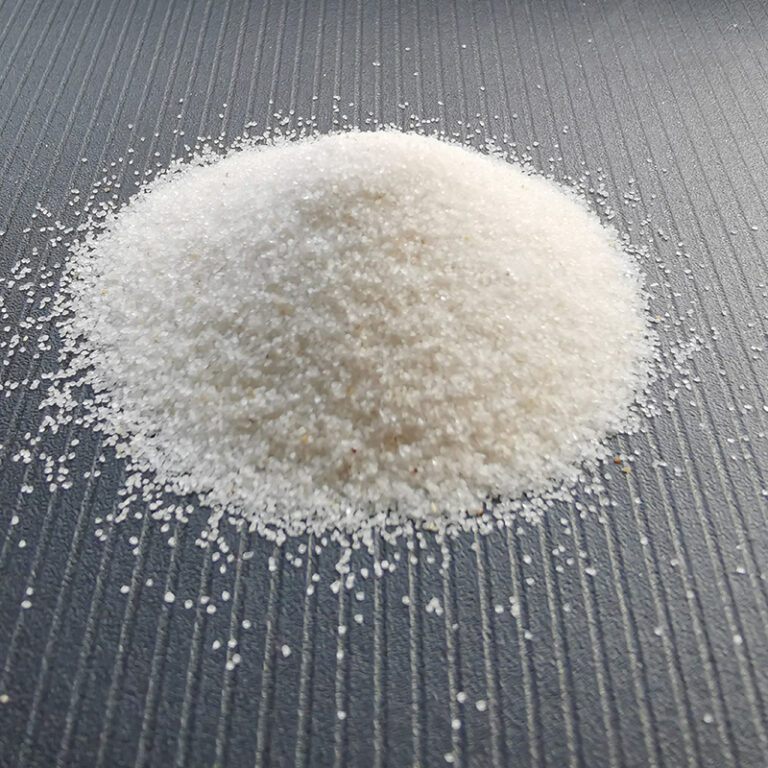
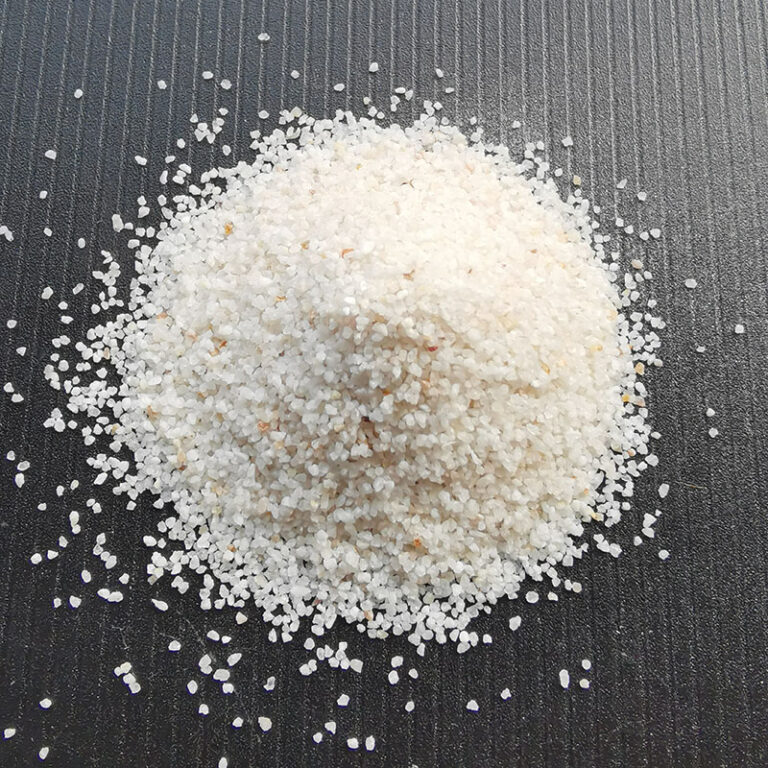
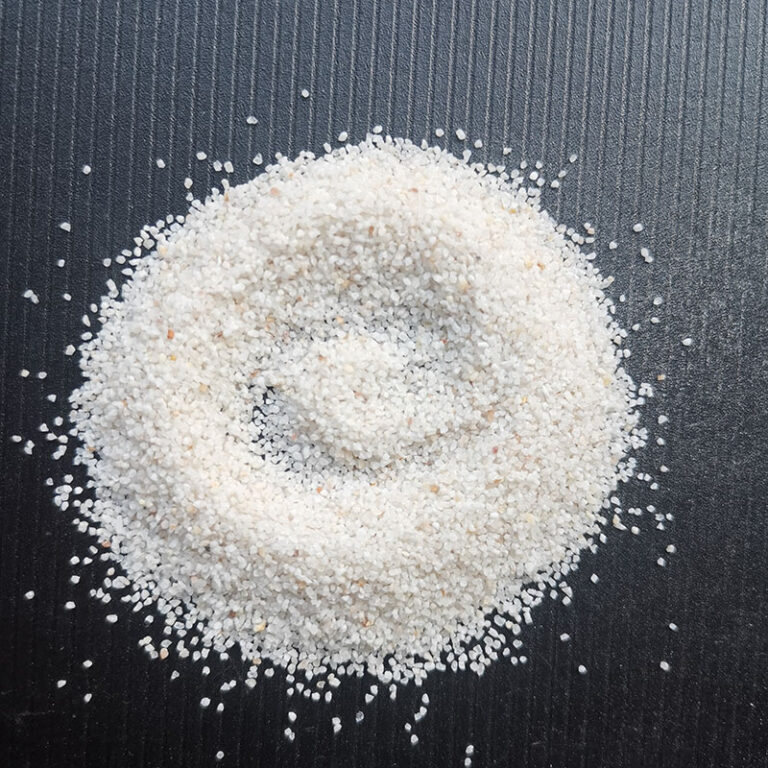
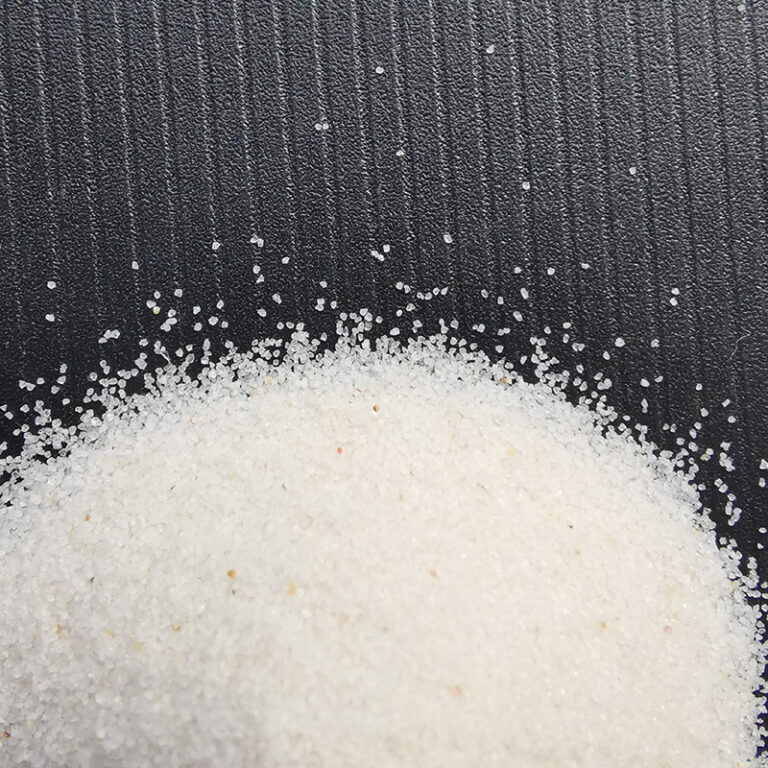
Quartz Grit / Silica Sand | High Purity Quartz Sand for Abrasive
Description: Quartz Sand (Silica Sand) Quartz sand is hard non-metallic silicate mineral particles obtained by crushing, screening and purification of natural quartz ore. Dominated by silicon dioxide, it has high hardness, excellent wear resistance, strong chemical stability and high temperature resistance. It is widely used in sandblasting & rust removal, glass manufacturing, foundry, water treatment filter media, ceramics, epoxy flooring, refractory materials and other industries.
Note: Sandblasting-grade silica sand contains free crystalline silica. Dust produced during sandblasting may cause silicosis, so outdoor sandblasting with silica sand is restricted in many regions. Garnet sand is an eco-friendly alternative abrasive.
- Package:
- 1000 kg, Super Bag or Sack
- 25 kg (55 lbs), Paper Bag or Woven Polypropylene Bag
Chemical Composition
| Item | Typical Index |
|---|---|
| Silicon Dioxide (SiO₂) | 90~99.9% (varies by purity grade; ≥90% for common sandblasting grade; high purity ≥99%) |
| Ferric Oxide (Fe₂O₃) | 0.02~0.3% |
| Aluminium Oxide (Al₂O₃) | 0.2~2.0% |
| Calcium Oxide (CaO) | 0.01~0.5% |
| Magnesium Oxide (MgO) | 0.01~0.3% |
| Titanium Dioxide (TiO₂) | 0.01~0.2% |
| Free Silicon | High, this is the biggest difference from garnet sand |
Physical & Chemical Properties
| Item | Parameter |
|---|---|
| Mohs Hardness | 7 |
| True Density | 2.65 g/cm³ |
| Bulk Density | 1.5~1.8 g/cm³ (varies with mesh size) |
| Melting Point | Approx. 1750 ℃ |
| Color | Milky white, colorless translucent, slightly pale yellow / light grey occasionally |
| Crystal Form | Trigonal system, conchoidal fracture, greasy luster |
| Chemical Stability | Acid resistant, except hydrofluoric acid; insoluble in water and common acids at ambient temperature |
| Particle Shape | Angular particles |
NIOSH lists abrasive blasting among the tasks that generate respirable crystalline silica, and puts substitution — choosing a media that contains little or no crystalline silica — first in its hierarchy of controls, which is exactly where glass beads sit.